
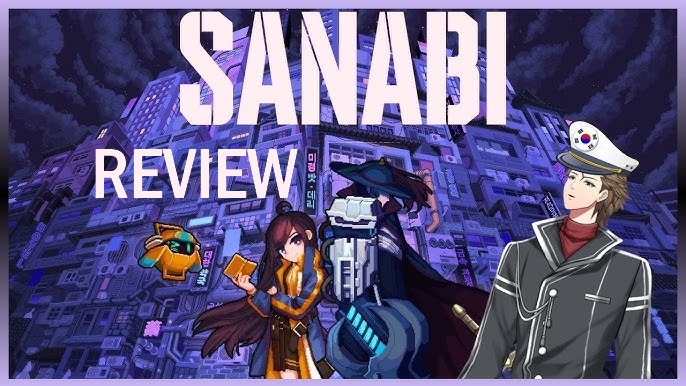
If you’ve ever wanted to glide through a neon-drenched cyberpunk city using nothing but a grappling hook while unraveling a heart-wrenching story of loss and redemption—SANABI is your game. This indie gem from Korean studio WONDER POTION blends tight platforming, emotional storytelling, and slick pixel art into an experience that’s equal parts Celeste, Katana ZERO, and something entirely its own. As someone who finished it days ago and still gets misty-eyed hearing the main theme, I’m here to tell you: this one hits harder than it looks.
🔑 Key Takeaways
- Genre: Pixel-art cyberpunk action-platformer with heavy narrative focus.
- Core mechanic: Grappling hook-based movement that evolves from clunky to exhilarating.
- Story: Deeply emotional, layered with foreshadowing—best experienced twice (playthrough + post-reveal replay).
- Difficulty: Challenging but fair; “Easy Mode” removes damage for story-focused players.
- Watch out for: Frequent white flashes and strobing effects—not safe for photosensitive players.
- Verdict: A must-play if you love story-driven games with satisfying movement and killer boss fights.
🎮 What Is SANABI About?
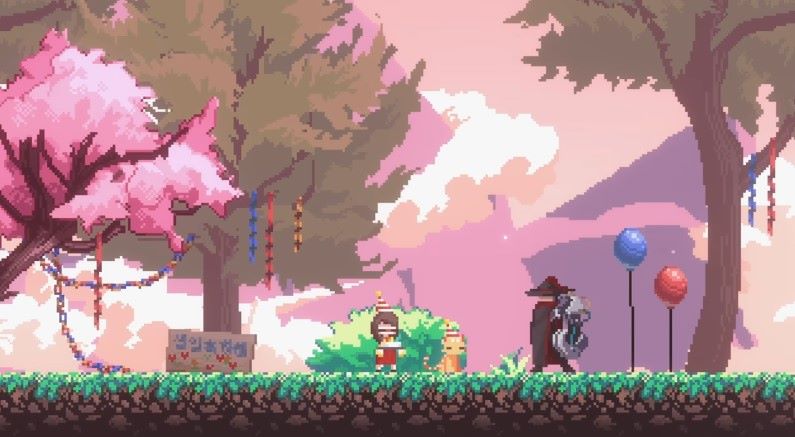
SANABI follows a retired general who returns to the dystopian metropolis of Magu City after a personal tragedy, seeking vengeance against the mega-corporation that destroyed his life. But beneath its revenge premise lies a tender, human story about fatherhood, memory, and sacrifice—centered around his daughter, Mari. The game unfolds across linear side-scrolling levels, blending fast-paced platforming with cinematic cutscenes and environmental storytelling. While comparisons to Katana ZERO are common (thanks to its pixel aesthetic and noir tone), SANABI feels more like Celeste meets Shadow Complex—with a grappling hook as your lifeline.
⚙️ How Does the Gameplay Feel – Especially the Grappling Hook?
At first, the grappling hook feels awkward. You can only latch onto specific points, and early levels restrict your mobility, making jumps feel stiff. But around the midpoint, you unlock a critical upgrade: the ability to instantly pull yourself toward anchored surfaces. Suddenly, everything clicks. By the late game, you’re zipping between walls, swinging under moving platforms, and dodging lasers mid-air like a cyber-ninja. The movement becomes fluid, expressive, and deeply satisfying – especially during boss fights.
The gameplay leans 70% precision platforming, 30% combat. Enemies are mostly environmental hazards or minor obstacles; the real challenge comes from timing, spatial awareness, and mastering your hook. Don’t expect Katana ZERO-style sword-slicing action, this is a runner at heart, not a brawler.
😰 Are There Any Frustrating or Problematic Sections?
Yes, but they’re intentional. Around the middle of the game, you enter a 20+ stage chase sequence with escalating music, collapsing platforms, laser grids, and zero room for error. It’s intense, stressful, and designed to make your palms sweat. Some players find it exhausting; others call it a masterpiece of tension. Either way, it’s unforgettable.
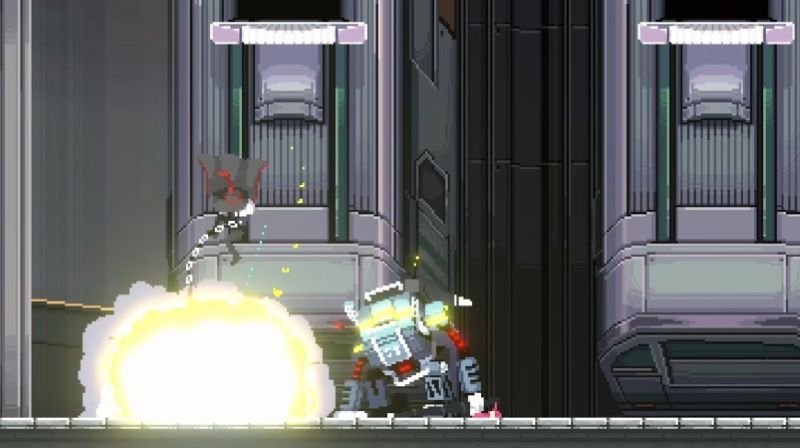
Other pain points:
- Bosses like “The Supervisor” and “Phoenix” require near-perfect execution, and dying means restarting the entire encounter.
- Time-limited escape sequences can feel punishing on repeat attempts.
- Photosensitive warning: Frequent white-screen flashes, strobes, and rapid light effects appear throughout – avoid if you have epilepsy or light sensitivity.
That said, the game offers an “Easy Mode” where you take no damage, ideal for players who just want to experience the story without the stress.
💔 Why Is the Story So Highly Praised?
Because SANABI tells its story like a novel written in motion. Early chapters feel cryptic, even contradictory. But every odd detail, strange line of dialogue, or unexplained character choice pays off in the final two chapters. The truth behind the protagonist’s mission, his relationship with Mari, and the meaning of “Sanabi” itself converge in a finale that’s both shocking and devastatingly beautiful.
Playing a second run after the reveal transforms the entire experience. Suddenly, quiet moments gain new weight, and earlier “plot holes” become brilliant misdirection. The pixel animations, subtle facial expressions, body language, tearful glances, add emotional depth rarely seen in indie platformers. Combined with a haunting soundtrack that echoes the main theme across every level, the narrative lingers long after credits roll.
“If everyone’s ending is the same, then when we reach it doesn’t matter. What matters is how we got there.”
Lines like this aren’t just poetic – they’re the soul of the game.
🎨 How’s the Art, Music, and Localization?
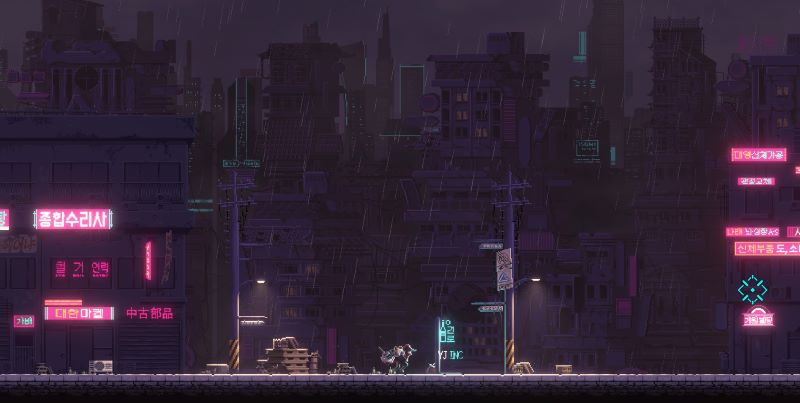
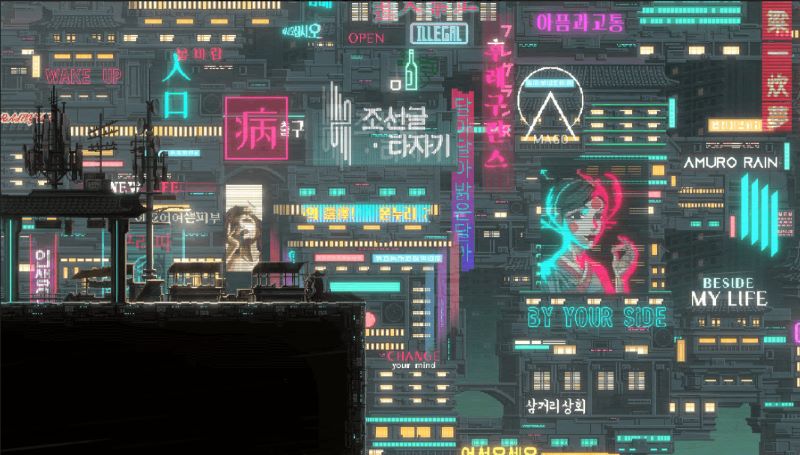
- Visuals: Gorgeous low-saturation pixel art with a distinct Korean cyberpunk flair—think rain-slicked alleys, flickering holograms, and melancholic neon. Smooth animations bring characters to life.
- Soundtrack: One of the best indie scores in recent memory. Each zone has a unique musical identity, but the recurring Sanabi leitmotif ties everything together emotionally.
- Localization (Traditional Chinese): Mostly clear, though some lines feel slightly awkward or mistranslated (e.g., one critical word off changes meaning). Rare English terms appear untranslated—but context makes them understandable. Not a dealbreaker, but noticeable.
Note: On PC, controller prompts default to Xbox layout—even when using a PS5 DualSense—so keyboard players might find it easier initially.
❓ Frequently Asked Questions (FAQ)
Q: Is SANABI similar to Katana ZERO?
A: Only in surface aesthetics (pixel art, revenge plot, cyberpunk setting). SANABI focuses on grappling-hook platforming and emotional storytelling—not time-manipulation combat or top-down action.
Q: Can I enjoy it if I’m bad at platformers?
A: Yes! Enable Easy Mode (no damage) to bypass most mechanical challenges. You’ll still need basic coordination for traversal, but it removes the frustration of repeated deaths.
Q: How long is the game?
A: Roughly 6–8 hours for a first playthrough. A second run (highly recommended) takes less time and reveals new context.
Q: Should I avoid it due to flashing lights?
A: Absolutely—if you’re photosensitive. The game includes frequent white flashes, screen wipes, and strobing effects with no toggle option. Check online clips before buying if unsure.
✅ Final Verdict: Who Should Play SANABI?
Play SANABI if you:
- Love narrative-driven indie games (To the Moon, GRIS, 12 Minutes)
- Enjoy precision platformers with evolving mechanics (Celeste, Dead Cells)
- Appreciate emotional storytelling with payoff-heavy twists
- Don’t mind high difficulty spikes or chase sequences
Skip it if you:
- Expect fast-paced combat or hack-and-slash action
- Are sensitive to flashing lights or rapid visual effects
- Prefer open-world or non-linear design
Despite being a debut title from a 5-person team, SANABI delivers a polished, poignant experience that punches far above its weight. With 96% positive reviews on Steam (over 6,000 ratings) and a story that left me crying at 2 a.m., it’s a hidden masterpiece that deserves far more attention.
“This is why we gather—because nothing lasts forever.”
And neither will your chance to miss this gem.


![Seed My Wife [v1.1] [NTRMAN] – Review & Download](https://wiki.qa-apk.com/wp-content/uploads/2025/11/seed-my-wife-v1.1-120x86.jpg)


![Tenants of the Dead [v1.53][NTRMAN]](https://wiki.qa-apk.com/wp-content/uploads/2025/10/tenants-of-the-dead-0-120x86.jpg)